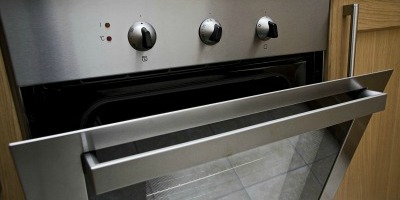
When a stove, oven, or cooker stops functioning in Pretoria, meal preparation comes to an abrupt halt. Fortunately, in more than 90% of service calls across Pretoria East, Centurion, and the Moot, the problem is isolated to an easily replaceable thermal or electrical component: a burnt circular Thermofan element, a welded simmerstat regulator, an earth-leaking concealed bottom bake element, or a charred 7-position selector switch contact block.
Modern multifunction ovens utilize a complex switching matrix that routes 230V mains through selector switches to engage top grill elements, bottom bake elements, and rear convection fans. A single burnt terminal pin on a selector switch can prevent the oven from receiving power while the interior light still turns on. Our technicians use high-temperature digital multimeters to measure element resistance (typically 23Ω to 28Ω for Thermofan elements, 35Ω to 45Ω for bottom bake elements) and perform 1000V insulation resistance megger testing to trace earth leakage trips.
Before booking a repair, perform these zero-cost checks: verify that the electronic digital clock timer on the front fascia is set to manual mode (a flashing clock after an Eskom power cut prevents the oven relays from energizing), check that the oven door closes tightly against its fiberglass gasket without sagging hinges, and ensure hotplate surface plates are free of severe corrosion build-up.
- Thermofan & Bake Element Overhauls: Testing resistance continuity (23Ω–28Ω for Thermofan, 35Ω–45Ω for bake), replacing burnt elements, and testing airflow.
- 7-Position Selector Switch Replacement: Rebuilding charred ceramic contact blocks, verifying cam profiles, and terminating heat-resistant fiberglass insulated wiring.
- Gas Thermocouple & FFD Safety Testing: Testing millivolt generation (15mV–30mV) on flame failure devices, calibrating spark electrodes, and testing valve seats.